SafeVault Academy
What Is a Seed Phrase?
Seed Phrase: the 12 or 24 words that restore your crypto wallet on any compatible device. Whoever has the words controls the assets. Learn how to protect it.
How to Store Your Seed Phrase Safely?
Protect your Seed Phrase from unauthorized access, loss and physical damage: where never to store it, best practices and a checklist for a lasting backup.
Paper or Metal? What's the Best Backup for Your Seed?
Paper is cheap but fragile. Metal survives fire and water but costs more and stays readable. Compare Seed Phrase backups and see what neither solves.
The 7 mistakes that make people lose their crypto
Most crypto losses come from simple Seed Phrase mistakes: photos, cloud storage, fake support scams, no backup. See the 7 most common and how to avoid them.
What happens if you lose your Seed Phrase?
Lost your Seed Phrase but still have wallet access? Move your funds. Without the Seed and the device, your assets may be lost for good. Here's what to do.
What is self-custody?
Self-custody means holding the keys to your crypto yourself, with no exchange. It removes third-party risk, but backup and recovery are up to you.
What is a hardware wallet?
A hardware wallet keeps your private keys offline and signs transactions on the device. Learn how it works and why it doesn't replace your Seed backup.
Do Ledger and Trezor Need a Seed Phrase?
Yes. Ledger and Trezor protect your keys day to day, but only your Seed Phrase backup can recover your funds. Learn why the device doesn't replace it.
How does the BIP-39 standard work?
BIP-39 turns a random number into 12 or 24 words — the Seed Phrase. Learn about the checksum, the passphrase and why word order matters.

How to create a crypto inheritance plan
Without a plan, heirs may never access your crypto. Learn how to build an inheritance plan without exposing your Seed Phrase while you're alive.
The Seed Phrase backup pain points the SafeVault Card solves
Exposed paper, a single copy, the cloud, an untested backup: the pains of storing a Seed Phrase and how the SafeVault Card solves each one, offline.
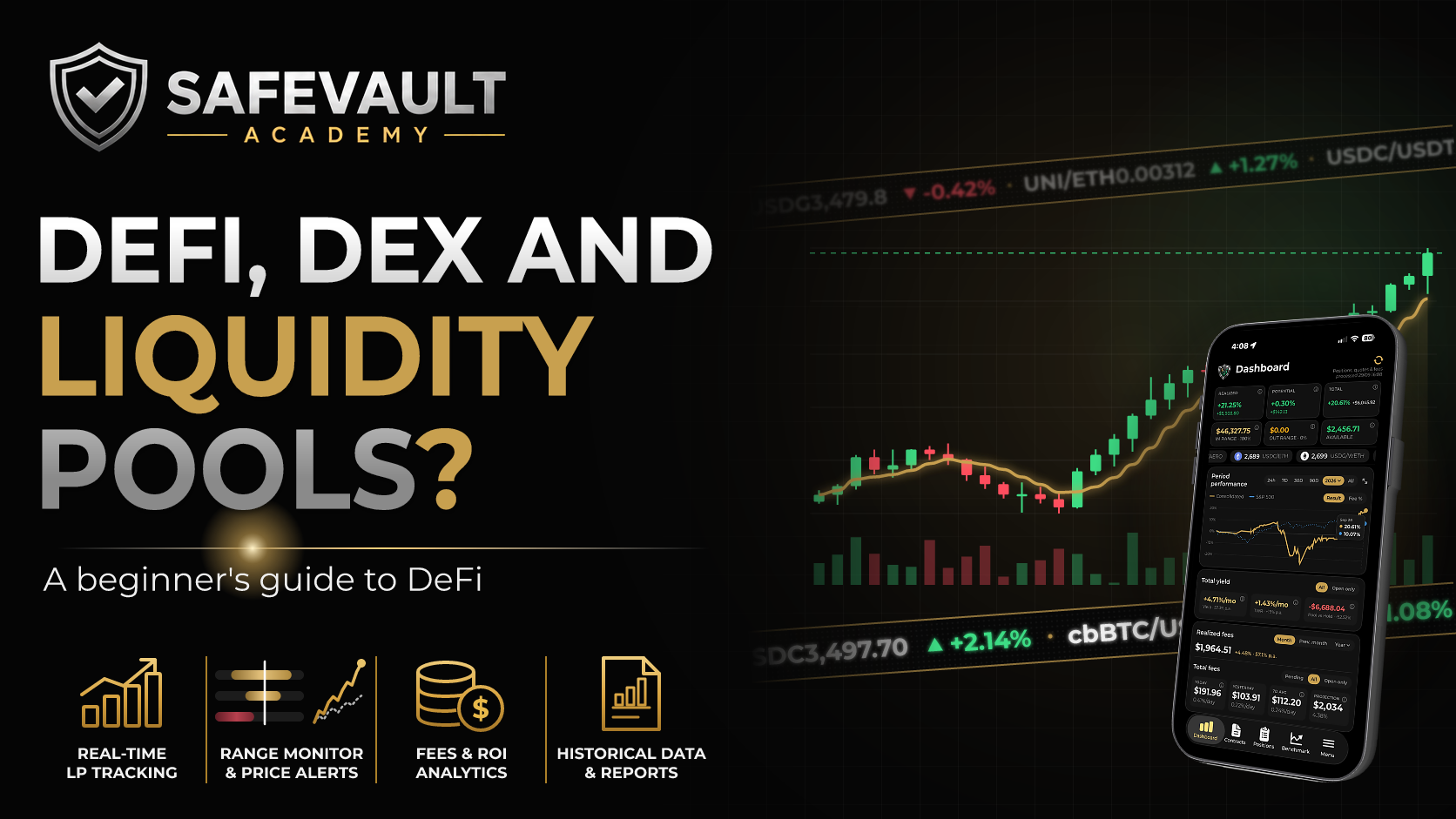
What Are DeFi, DEXs and Liquidity Pools?
DeFi is finance run by smart contracts, a DEX is a decentralized exchange, and liquidity pools power the trades. Learn how liquidity providers earn.
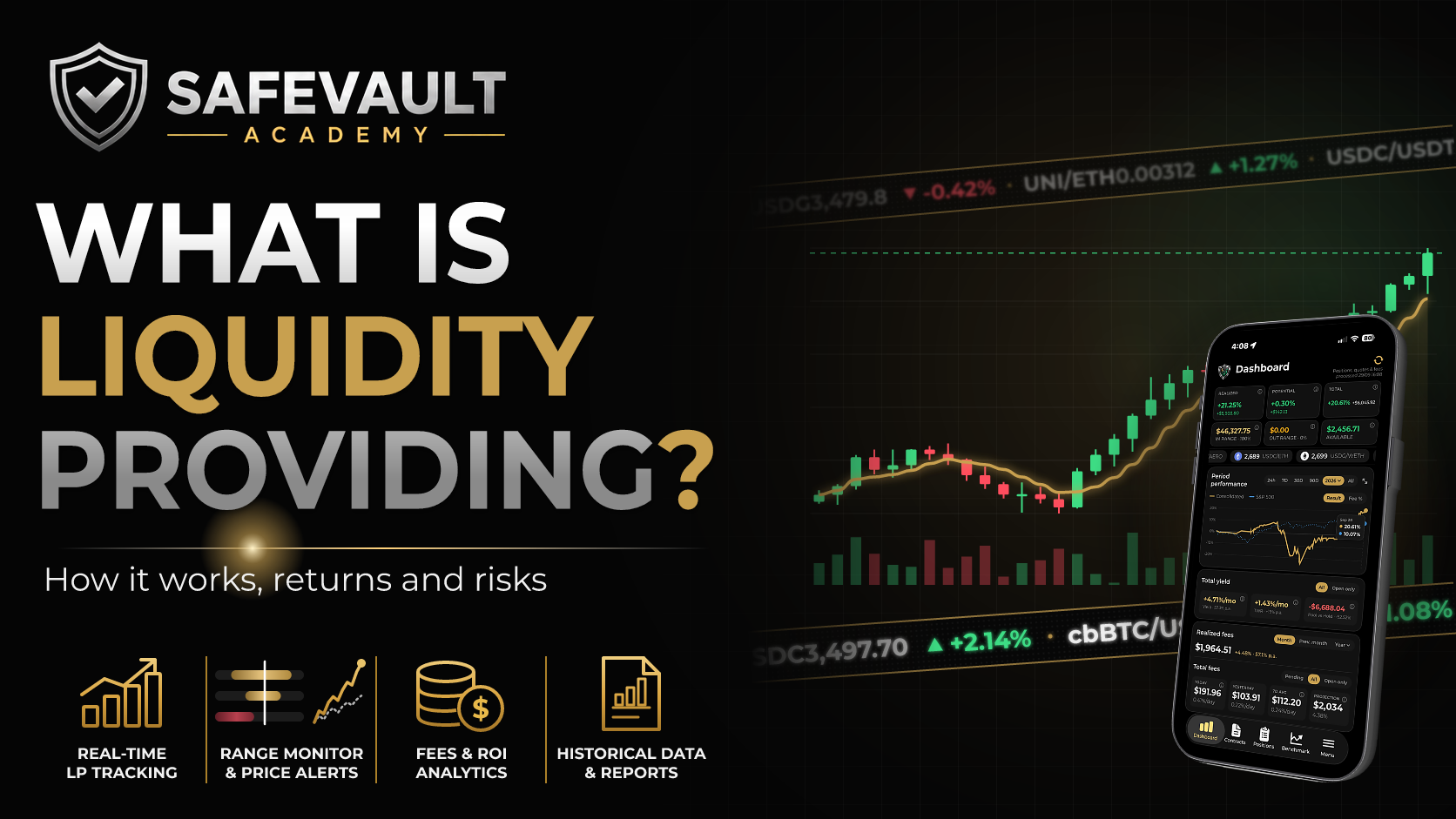
What Is Liquidity Providing and How Does It Work?
Liquidity Providing means depositing two tokens in a DEX pool to earn a share of trading fees. See how it works, where returns come from, and the risks.
Uniswap, Aerodrome, and other DEXs: how do liquidity pools work?
Uniswap and Aerodrome use different pool models. See how each DEX works and why the model changes how you measure a position's results.
Uniswap V3, Uniswap V4, and Aerodrome Slipstream: What's the Difference?
Uniswap V3, V4, and Aerodrome Slipstream all use concentrated liquidity but differ in architecture, fees, and rewards. Compare the three side by side.

Aerodrome Basic vs Slipstream: how does each model work?
Basic is Aerodrome's traditional pool with no price range; Slipstream is concentrated liquidity. See how efficiency, risk and AERO rewards compare.
Concentrated liquidity: how do ranges, ticks and positions work?
In concentrated liquidity, you choose the range where your capital works. Learn about ticks, narrow-range efficiency and what happens out of range.
How to choose a liquidity pool and a token pair?
Choosing a pool goes beyond the highest APR: weigh the token pair, fee tier, volume versus liquidity and risks, and learn to estimate a pool's fee APR.
Impermanent Loss: What It Is and How to Calculate It
Impermanent Loss is the gap between your liquidity position and simply holding the same tokens. See the formula, a worked example and the role of fees.
Fees vs Impermanent Loss: How Do You Know If an LP Is Profitable?
Fees aren't profit: an LP only wins when fees and rewards outweigh Impermanent Loss. See the full math, a worked example, and the metrics that matter.
How to calculate the ROI and performance of a liquidity pool
Pool ROI = (current value + fees − capital) ÷ capital. With deposits and withdrawals, weight by time. See formulas, examples and how to annualize.
How to track and compare liquidity pool positions
Comparing LPs by dollar value is misleading. Learn to track your positions with percentage return, annualized APR, time in range and pool vs hold.
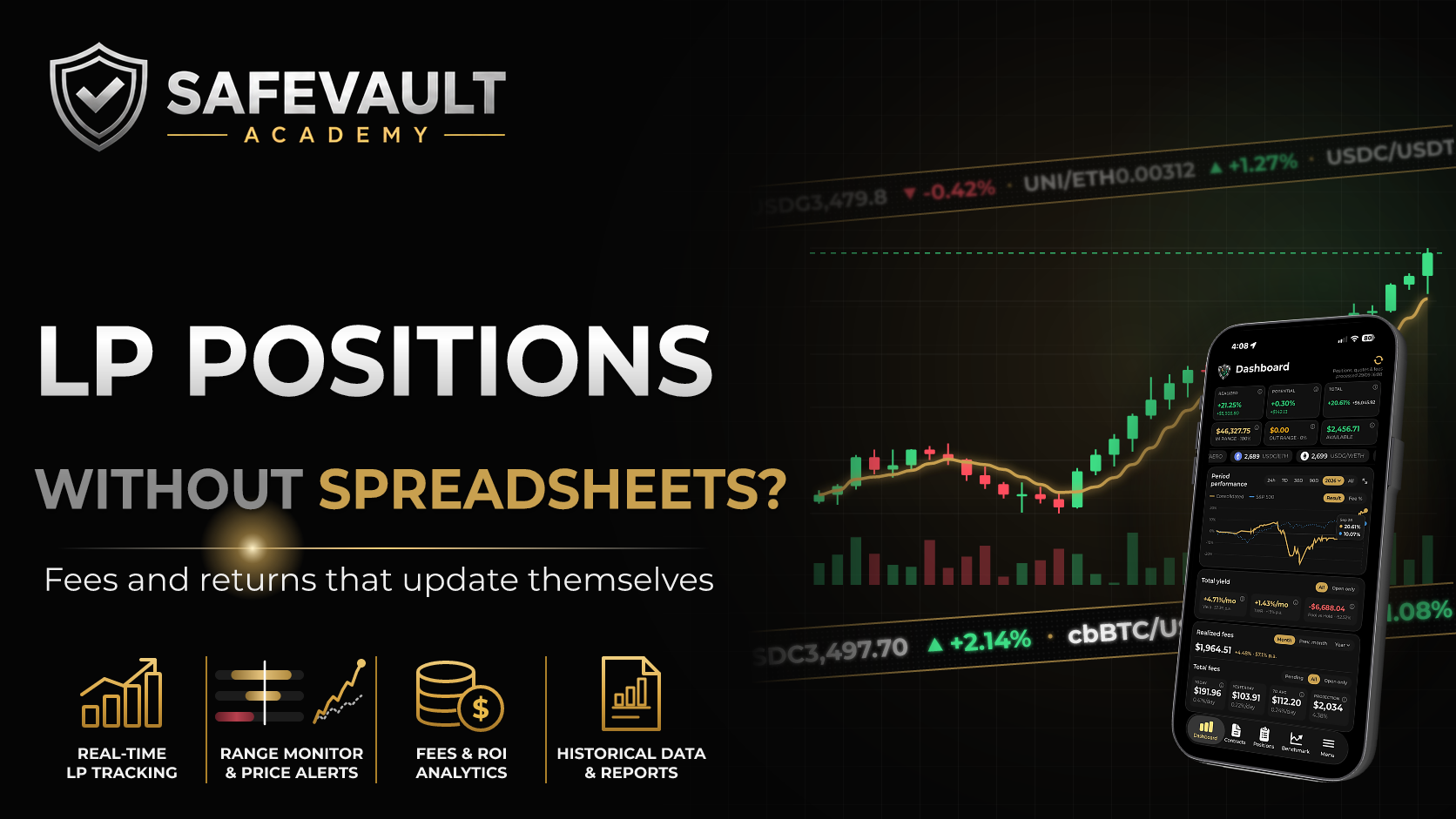
How can you track your LP positions without spreadsheets?
LP spreadsheets go stale fast. See what to record, where they usually go wrong, and when it's worth switching to an automatic tracker.
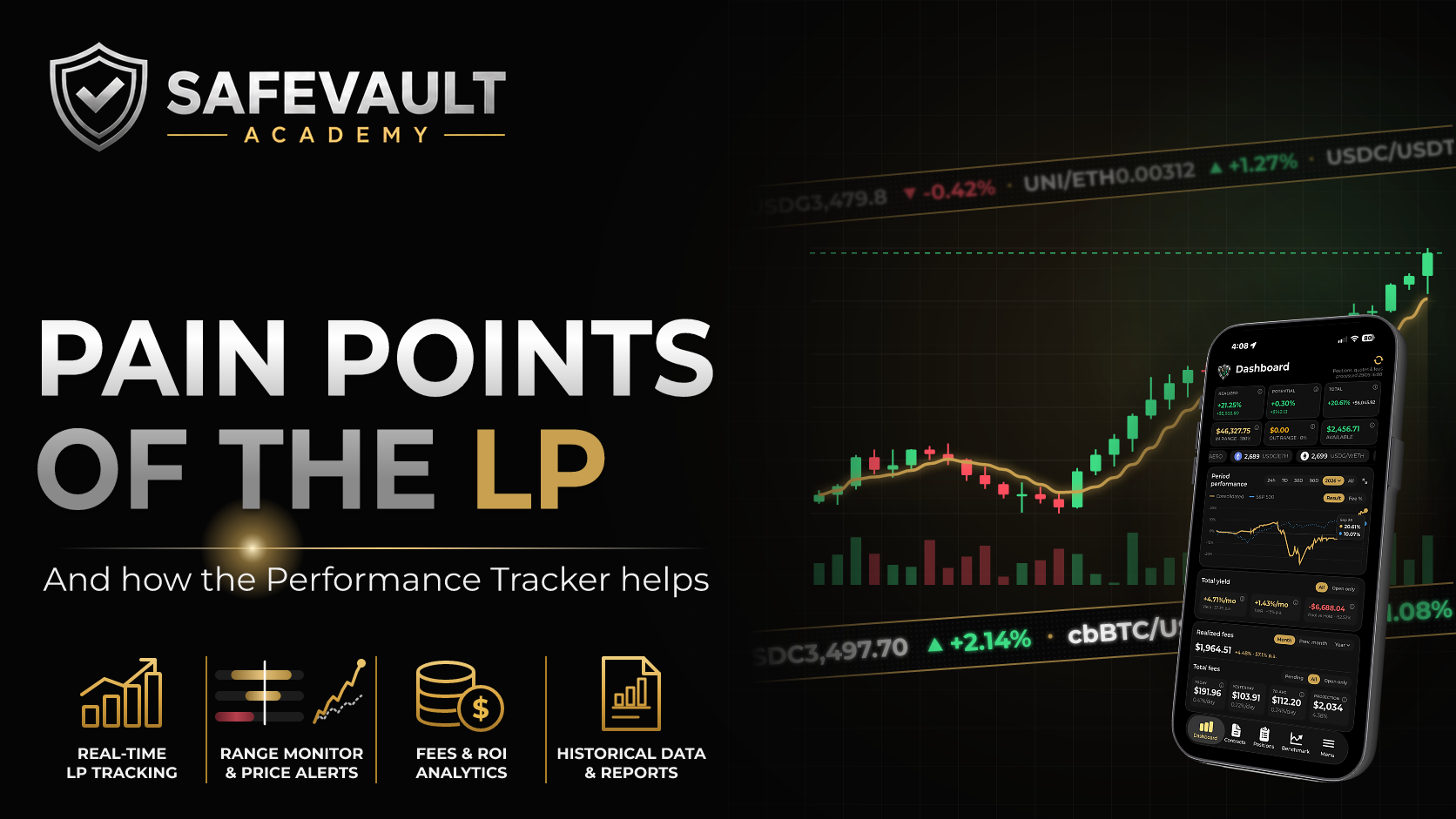
The Liquidity Provider Pain Points the Performance Tracker Solves
Unclear profits, stale spreadsheets, AERO left out, out-of-range surprises: see how the SafeVault Performance Tracker solves common LP pain points.